
GET TO KNOW OUR WORK

LPCC NEWS


doctor-talk.jpg

One of the patient's responsibilities is to actively participate in his or her health care. For this to be possible, it is important to communicate effectively with the physician. Effective communication can be achieved when the patient arranges in advance to exchange information. You are responsible for providing complete information about your personal medical history. He needs to clearly express his questions and concerns. And it is essential that he verbalizes his decisions regarding recommended treatment.


composite-image-female-patient-listening-doctor-with-concentration-medical-office-1200x590.jpg

LOGO FAMILY TREES PROGRAM

Family Inheritance

We know that human beings can inherit physical characteristics from their parents. For example, visible characteristics such as height, skin and eye color. They can also inherit personality characteristics such as character and way of being. But you also inherit biological characteristics. These may influence your risk of developing diseases such as cancer. It happens that in some cases laboratory tests are needed to evaluate such non-visible characteristics. The results will describe features of the family's biological inheritance.


It is estimated that 1 in 100 cases of breast cancer develop as a result of family genetics. It is estimated that out of every 100 cases of cancer, 5 to 10 are hereditary.

Genetic or Hereditary Cancer

For some people it is important to know the biological inheritance also known as family genetics. This information is used to determine whether it is necessary to evaluate health on a regular basis, and to take certain preventive measures.

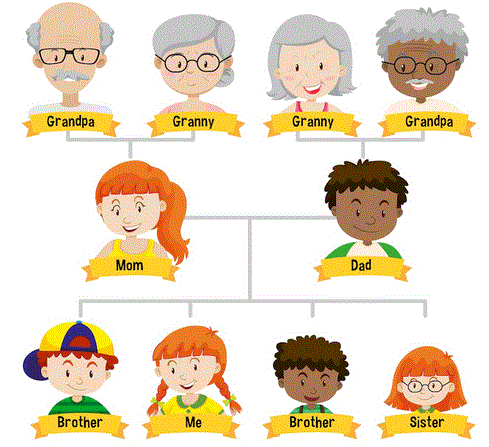
IMAGE FAMILY TREE

The physician may recommend genetic testing when there is a history of familial cancer, and the person or close relatives present:

  • Breast cancer before the age of 45.
  • Aggressive or triple negative breast cancer.
  • Breast cancer that recurs in the same breast or later appears in the opposite breast when the first diagnosis was at age 50 or earlier.
  • Ovarian cancer at any age.
  • Male breast cancer.
  • Aggressive and metastatic prostate cancer.
  • Pancreatic cancer.
  • Melanoma or aggressive skin cancer.
  • Jewish ancestry.

Warning Signs

Genetic testing may also be warranted when the person has more than 2 maternal or paternal relatives with the same type of cancer, or when they have relatives with related cancers, such as breast and ovarian cancer. In addition, when you have more than 3 family members diagnosed with cancer which would reflect a strong family cancer history.

Decision Making

When a person receives a diagnosis of cancer they will be asked about their family cancer history. This information along with other data will determine if it is appropriate to recommend family genetic testing. If so, the patient will need to receive genetic education and counseling. This is the process of orienting the patient to these tests and their results. The patient will then be prepared to decide and to act.

Most cases of cancer are NOT related to family genetics. But in cases where a familial pattern of cancer diagnoses is observed, genetic screening may help.


© 2025 Puerto Rican League Against Cancer. Designed by Wigo Technologies.
Privacy Policy: Accreditations: Price Transparency